
Building Predictable Lead Generation Systems for Modern Businesses
In today’s competitive digital landscape, businesses are no longer struggling because of a lack of marketing channels, but because of inconsistency in how those channels perform together. Companies invest heavily in ads, SEO, and social media, yet still face unpredictable results because there is no unified system connecting traffic, messaging, and conversion. Without structure, every campaign becomes isolated, leading to unstable performance, wasted budget, and difficulty in scaling outcomes reliably over time.
Lead generation is not simply about collecting inquiries or generating random leads; it is about building a repeatable, system-driven engine that consistently attracts qualified prospects. A strong system ensures that every visitor enters a controlled journey designed to filter, educate, and convert them. Without this structure, businesses experience fluctuating lead quality, higher acquisition costs, and low conversion efficiency, which makes long-term growth difficult to sustain.
Understanding Lead Generation Systems
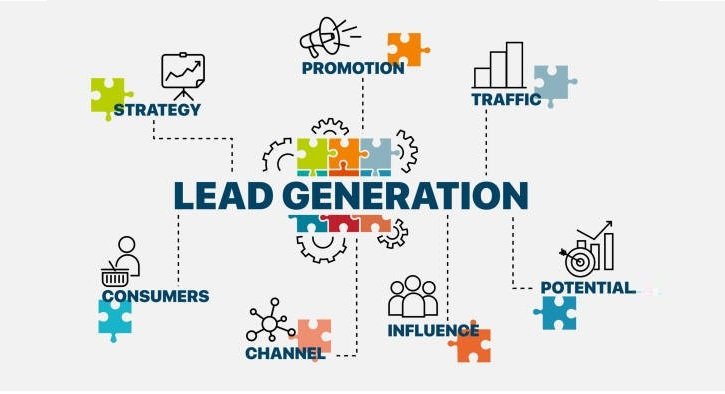
A lead generation system is a structured framework that combines multiple marketing components such as traffic channels, landing pages, funnels, automation, and conversion strategies into a single coordinated ecosystem. Its purpose is not just to generate traffic but to consistently convert that traffic into qualified leads through a controlled and optimized process. Unlike random campaigns, it focuses on predictable outcomes driven by data and structure.
This system integrates paid advertising, optimized landing pages, lead capture mechanisms, CRM automation, and retargeting strategies to guide users through each stage of the buyer journey. Every component plays a specific role in reducing friction, increasing engagement, and improving lead quality. When properly connected, these elements create a seamless flow where prospects are continuously nurtured until they are ready to convert.

A business does not grow by chance—it grows by systems that consistently generate opportunities.
Why Businesses Struggle with Lead Consistency
Most businesses fail to achieve consistent lead flow because they treat marketing as disconnected activities instead of a unified system where every component works together. Ads, websites, funnels, and content are often created in isolation without a shared strategy, which breaks the customer journey and leads to inconsistent conversions and unpredictable performance over time.
Another major issue is the lack of performance visibility and structured tracking. Without clear insight into which channels, messages, creatives, and funnels are actually generating qualified leads, businesses are unable to identify what is working or failing. This leads to inefficient scaling decisions, where budget continues to be spent on underperforming systems instead of doubling down on high-performing acquisition sources.
Key Components of a High-Performance Lead System
A high-performance lead system is built on structured integration of traffic, conversion, and follow-up mechanisms that function as a single unified ecosystem rather than separate marketing efforts. It begins with targeted traffic acquisition through paid advertising or organic channels that are carefully optimized to attract users with clear intent and higher probability of conversion.
Once users enter the system, they are guided through a strategically designed conversion funnel that includes optimized landing pages, persuasive messaging, and clearly defined user flows. Every element of the funnel is engineered to reduce friction, build trust, and align with user intent so that visitors naturally progress toward taking a desired action without confusion or drop-off.
The system is then strengthened through continuous optimization driven by real performance data. Metrics such as conversion rates, drop-off points, click behavior, and engagement patterns are analyzed to refine targeting, improve messaging, and restructure funnel components. Over time, this creates a compounding effect where the system becomes increasingly efficient, predictable, and scalable.
Role of Automation and Optimization
Automation is what transforms a lead generation process from a manual, inconsistent effort into a scalable and repeatable system. Through tools like CRM automation, email nurturing sequences, behavioral triggers, and ad retargeting flows, businesses can maintain continuous engagement with prospects without requiring constant human intervention. This allows leads to be nurtured systematically until they are ready to convert.
Optimization ensures that this system does not remain static. By continuously analyzing performance data such as click-through rates, conversion rates, drop-off points, and user behavior patterns, businesses can identify inefficiencies within the funnel. Techniques like A/B testing, audience segmentation, and funnel refinement enable continuous improvement, ultimately increasing ROI while reducing acquisition costs over time.
Conclusion
Building a predictable lead generation system is fundamentally about replacing randomness with structure. Instead of relying on inconsistent campaigns or unpredictable traffic spikes, businesses create a controlled environment where leads are generated, tracked, and nurtured through a clearly defined system designed for scalability.
DesignWedge focuses on engineering these structured acquisition systems by integrating traffic generation, conversion optimization, and automation into a unified framework. This allows businesses to move beyond experimental marketing efforts and establish a reliable engine for consistent customer acquisition and long-term growth.
Leave a Reply